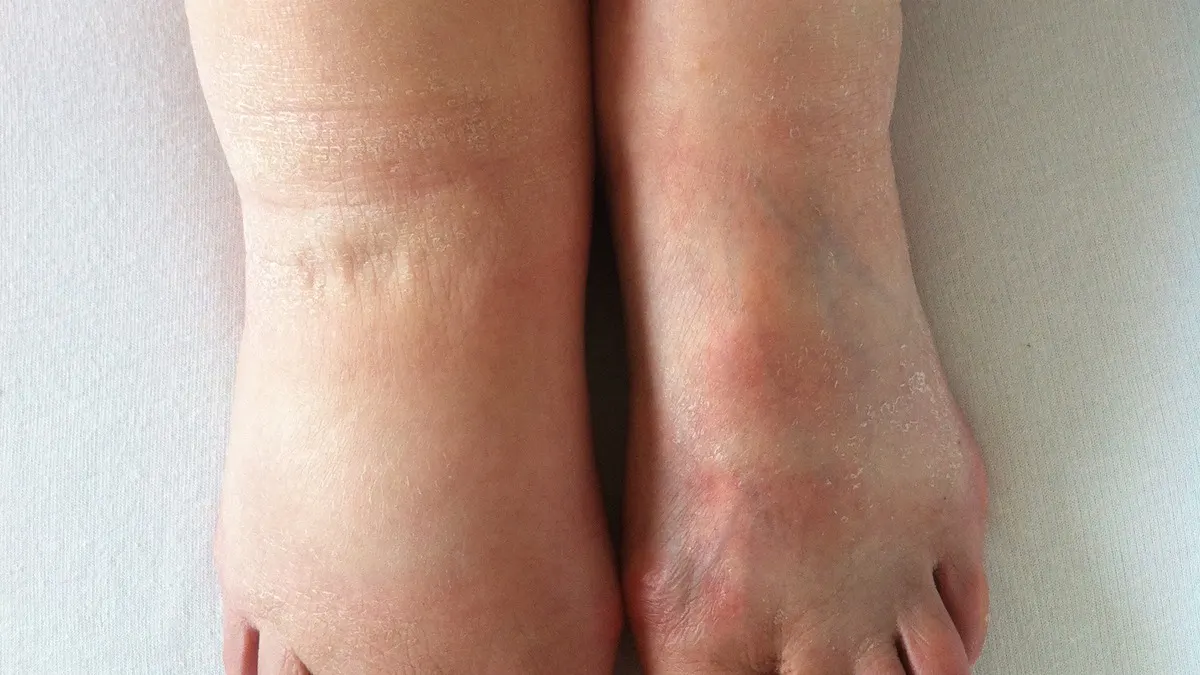
Left leg swelling that does not affect the right leg can be unsettling, and it is worth taking seriously. Swelling in only one leg is more likely than swelling in both to have a local cause, and one of the possible causes is a deep vein blood clot (DVT). Other causes are common and harmless by comparison, such as an injury or a vein problem. This page explains why only one leg may swell, with a focus on DVT and May-Thurner syndrome, and which signs mean you should be seen urgently.
Why one leg and not both?
When both legs swell, doctors often think of a body-wide cause: salt and fluid retention, medicines, or heart, kidney or liver conditions. When only one leg swells, the search narrows to something that affects that leg specifically. That could be a blockage in its veins or lymph vessels, an infection or an injury. This difference is the main reason one-sided swelling is treated with more caution. For a wider view, see our overview of leg swelling.
Possible causes of swelling in one leg
Deep vein thrombosis (DVT)
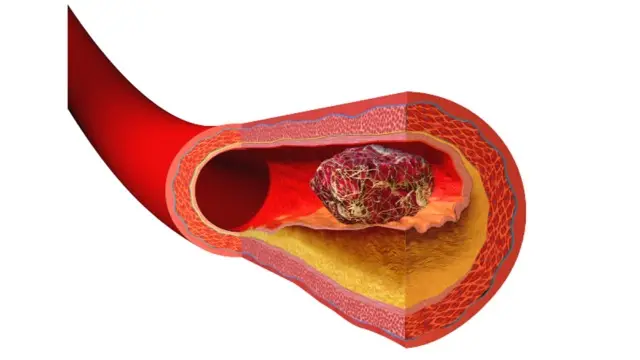
A DVT is a blood clot in a deep vein. It partly or fully blocks blood flow out of the leg, so fluid collects below the clot. The swelling usually develops over hours to days. The leg may feel heavy, tight, achy or tender, particularly in the calf, and may look red or darker and feel warm. Some people have swelling with little pain. Risk factors include recent surgery or hospital stay, long immobility, cancer, pregnancy, hormones and a past clot. Our page on preventing DVT explains these in more detail.
Why the left leg in particular?
Studies suggest DVT is found in the left leg more often than the right. One reason is the layout of pelvic veins: the left iliac vein runs beneath the right iliac artery, which can press it against the spine. This leads to our next cause.
May-Thurner syndrome
In May-Thurner syndrome, the left iliac vein is compressed by the artery crossing over it. In some people this narrowing slows blood flow and makes a left-sided clot or long-standing left leg swelling more likely. Many people with this anatomy never have symptoms, so it is usually considered when a left leg clot or swelling occurs without a clear reason, especially in younger people. Diagnosis involves imaging and specialist assessment, and treatment depends on the findings.
Chronic venous insufficiency and varicose veins
Leaking valves in the veins of one leg can cause lingering swelling that gets worse through the day and eases overnight. Often there are also varicose veins, aching, itching or darkened skin. This is called chronic venous insufficiency, and it can be treated.
Infection (cellulitis)
A bacterial skin infection can make one leg swollen, red, hot and painful, sometimes with fever. This needs prompt medical treatment.
Injury and muscle problems
A sprain, muscle tear, bruise or ruptured calf muscle can cause one-sided swelling and pain, often after a clear event. Injuries can also, rarely, trigger a clot, so persistent or worsening swelling should be checked.
Lymphoedema and other causes
If the lymph vessels that drain fluid are damaged or blocked, for example after surgery, infection or cancer treatment, one leg can swell slowly and persistently. Less commonly, a mass or enlarged lymph nodes in the pelvis can press on the veins or lymph channels.
Signs that swelling needs urgent care
Take left leg swelling, or swelling in either leg, seriously if it:
- appeared suddenly or over a day or two;
- is painful, tender, warm, red or darker in colour;
- follows recent surgery, hospital stay, long travel or immobility;
- occurs during pregnancy or soon after birth;
- happens in someone with cancer, a past clot or a family history of clots;
- comes with fever or feeling very unwell.
You cannot reliably tell a clot from other causes by looking, which is why professional assessment matters.
How doctors find the cause
Your doctor will ask about the timeline, your health history and medicines, and examine both legs. They may use a scoring system to estimate the likelihood of a clot, as described in NICE guideline NG158, and arrange a D-dimer blood test and a leg ultrasound. Ultrasound scans of leg veins can show clots as well as leaking valves. If the cause remains unclear, further imaging of the pelvic veins may be used.
What treatment involves
Treatment depends entirely on the cause. A confirmed DVT is usually treated with blood-thinning medicines prescribed by a doctor. Never begin or stop these medicines on your own. Infections need antibiotics, injuries need rest and care, and vein disease may be managed with compression or procedures. See our guide to venous insufficiency treatment for vein-related options.
Do not massage the leg, and avoid home remedies in the meantime. Our page on dissolving blood clots naturally explains why they are not a safe substitute for assessment.
Why a clot matters
If a piece of a leg clot breaks away, it can travel to the lungs and cause a pulmonary embolism, which can be life-threatening. Early diagnosis and treatment of DVT lowers that risk considerably.
A closer look at risk factors for a clot
Some people are more likely to develop a clot-related one-sided swelling. Risk rises after major surgery, particularly on the hip, knee or abdomen, after a fracture or when a leg is in a cast, during long hospital stays, in people with cancer, during pregnancy and the weeks after birth, and with oestrogen-containing medicines. A previous clot or a family history of clots also matters. None of these means you have a clot, but they lower the threshold for getting checked.
What to do before you are seen
If you suspect a clot, arrange assessment quickly rather than waiting. Meanwhile, avoid massaging or rubbing the leg, and do not apply heat. Note when the swelling started, whether it is painful, and any recent surgery, travel, injury or new medicines. This information helps the doctor. If you take blood-thinning medicine already and notice new swelling, contact your doctor without delay.
What happens after a diagnosis
If a clot is found, treatment is usually started promptly and most people continue normal daily activities, with advice from their doctor. If another cause is found, such as venous insufficiency, lymph problems or infection, your doctor will explain a plan. Some people are referred to a vein or vascular specialist, particularly when May-Thurner syndrome or long-term venous problems are suspected.
When to see a doctor
See a doctor the same day if you have new swelling in one leg, particularly if it is painful, warm, red or discoloured, or if it follows surgery, illness or a long journey. Do not wait for it to pass.
Call 995 immediately if you have sudden chest pain, sudden breathlessness or you cough up blood, with or without leg symptoms.
If your one-sided swelling has lasted for weeks and comes with visible veins or skin changes, a vein assessment is a sensible next step. You can also read about swollen ankles and general swelling relief.
This page is general education and not a substitute for personal medical advice.
Frequently asked questions
Why is only my left leg swelling?
Common reasons include a blood clot, an injury, infection, a vein problem such as venous insufficiency, lymph drainage problems and, less commonly, a narrowing of a pelvic vein as in May-Thurner syndrome. Because a clot is one possibility, new one-sided swelling should be checked.
Is left leg swelling more likely to be DVT?
DVT is reported more often in the left leg than the right in many studies, partly because of the way the left iliac vein crosses beneath an artery in the pelvis. But either leg can be affected, and swelling alone cannot confirm the cause.
Can one swollen leg be harmless?
Yes. A minor injury, a long day on your feet, or a vein problem in one leg can all cause mild swelling. The concern is that harmless and dangerous causes can look alike, so a check is wise if it is new, painful or unexplained.
How is the cause of one-sided swelling found?
A doctor will examine you, assess your risk factors and often arrange a blood test and a leg vein ultrasound. Further scans may be used if the cause is not clear.
Should I go to the emergency department?
If you have sudden swelling with pain, warmth or redness, see a doctor the same day. If you have chest pain, sudden breathlessness or cough up blood, call 995.
Sources and further reading
This article is general information, not personal medical advice. Please speak to a doctor about your own symptoms. How we create our content.