Call 995 straight away if you have:
- sudden chest pain or tightness
- sudden shortness of breath or fast breathing
- coughing up blood
- feeling faint or collapsing
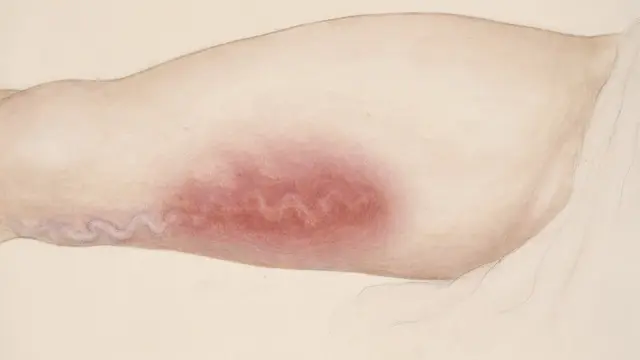
- one leg that is suddenly swollen, painful, warm or red
- sudden weakness of the face, arm or leg, trouble speaking, or a sudden severe headache
These can be signs of a clot in the lungs, heart or brain, or a deep vein in the leg. Do not drive yourself.
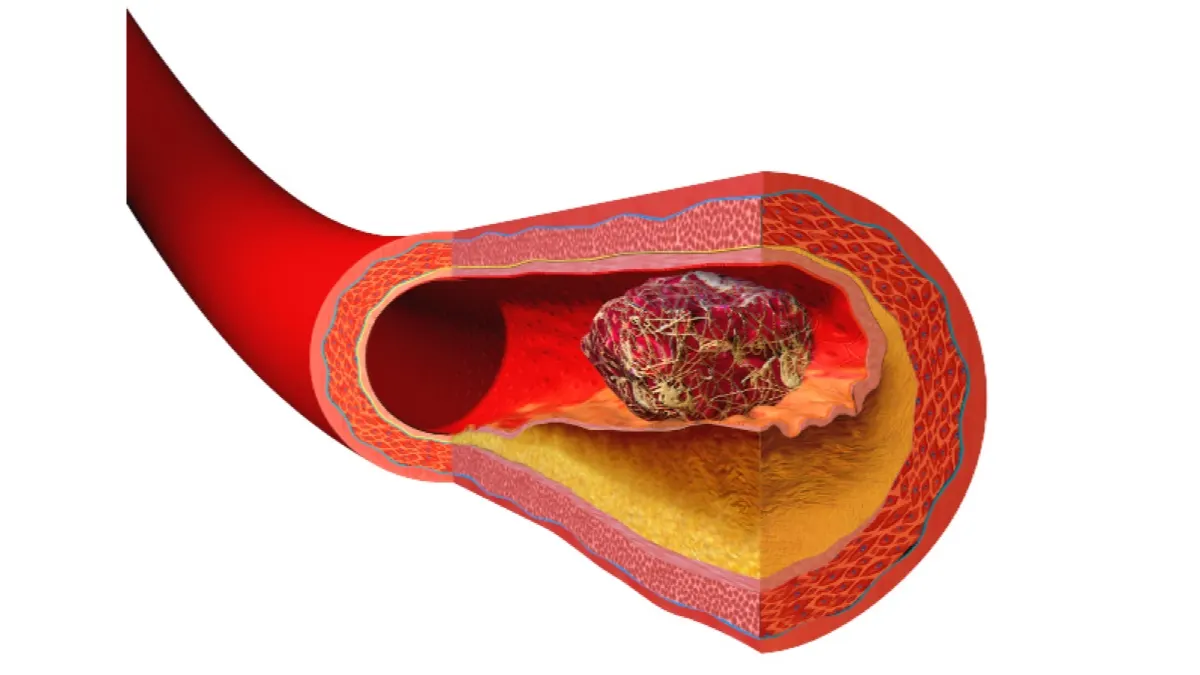
A blood clot is a clump of blood that has changed from a liquid into a thicker, gel-like mass. Clotting is a normal and useful process: when you cut your skin, platelets and clotting proteins join together to plug the wound and stop the bleeding. A clot becomes a problem when it forms inside a blood vessel where there is no wound to seal, or when it grows large enough to block blood flow. This page explains what a blood clot is, how clots form, the main types, and where to read more.
What is a blood clot, and what does thrombosis mean?
Your blood is designed to flow freely and to clot only when needed. The medical word for a clot that forms inside a blood vessel is thrombosis (the clot itself is called a thrombus). People often ask for the thrombosis meaning, and it simply means “blood clot inside a vessel”. If part of a clot breaks off and travels through the bloodstream, it is called an embolus, and the blockage it causes elsewhere is an embolism.
So “what is thrombosis” and “what is a blood clot” are, in practice, the same question seen from different angles. Terms like these are collected in our glossary.
Arterial clots and venous clots
Clots are grouped by the kind of vessel they form in.
Arterial clots form in the arteries, the vessels that take oxygen-rich blood out from the heart. They usually develop where artery walls have been damaged by fatty build-up (atherosclerosis). A clot that blocks an artery in the heart can cause a heart attack, and one that blocks an artery to the brain can cause a stroke. These are emergencies.
Venous clots form in veins, which return blood to the heart. The most familiar example is a clot in a deep leg vein, called deep vein thrombosis (DVT). If a piece breaks off and reaches the lungs, it causes a pulmonary embolism. DVT and pulmonary embolism together are called venous thromboembolism.
Surface vein clots form in veins just under the skin, often in the legs, sometimes in a varicose vein or after a drip. They cause a tender, red, hard cord. They are usually less dangerous than deep clots but can sometimes extend, so they should be checked. See phlebitis.
How do blood clots form?
Doctors often describe three main ingredients, which together make clots more likely:
- Slow or stagnant blood flow. Long flights, bed rest after surgery, or sitting still for hours reduce the muscle pumping that keeps blood moving in the legs.
- Damage to the vessel wall. Injury, surgery, infection, or inflammation can irritate the lining of a vein or artery.
- Blood that clots too easily. Cancer, pregnancy, some medicines, inherited conditions and some illnesses make the blood more likely to clot.
Often more than one of these is present at once.
What causes blood clots?
Many people ask what causes blood clots. Risk rises with:
- recent surgery, especially of the hips, knees or abdomen
- injury, especially a broken leg or a leg in a cast
- being in hospital, or in bed for long periods
- cancer and some cancer treatments
- pregnancy and the weeks after birth
- medicines containing oestrogen, such as some contraceptive pills and hormone therapy
- a previous clot, or a close relative who has had one
- older age, obesity and smoking
- long journeys with little movement, particularly when combined with other risks
- inherited clotting tendencies, which are less common
Having a risk factor does not mean you will get a clot. Many clots happen in people with several smaller risks adding up, and sometimes no clear cause is found. Varicose veins are generally a different problem from deep vein clots, but see varicose veins for how they differ.
Warning signs to know
Symptoms depend on where the clot is.
Deep vein clot in the leg: swelling, usually in one leg, with pain or tenderness, warmth, or red or dark skin. Our guide to blood clot in leg symptoms explains more. Some people have few or no symptoms.
Clot in the lung: sudden shortness of breath, chest pain that is worse when breathing in, coughing (sometimes with blood), a fast heartbeat or feeling faint.
Clot in the heart: chest pain or pressure, which may spread to the arm, jaw or back, with sweating or nausea.
Clot in the brain: sudden facial droop, arm weakness, slurred speech, vision loss or severe headache.
Can you dissolve a blood clot naturally?
No home remedy has been shown to safely dissolve a clot. Water, exercise, supplements and herbal products cannot replace medical treatment, and some herbs and supplements can interact with blood thinners. Read can you dissolve blood clots naturally? for the evidence. Treatment is medical, usually with blood-thinning medicines prescribed by a doctor. See DVT treatment.
Reducing your risk
You cannot remove every risk, but sensible steps include staying active, moving regularly during long trips, not smoking, keeping a healthy weight, and telling your doctor about your clot history or family history before surgery, pregnancy or starting hormone medicines. Our guide on how to prevent DVT has practical tips, and compression stockings for blood clots explains when stockings are used.
When to see a doctor
Call 995 immediately for sudden chest pain, sudden breathlessness, coughing up blood, collapse, or signs of a stroke such as facial droop, arm weakness or slurred speech.
See a doctor the same day if you have a swollen, painful, warm or discoloured leg, especially only one leg, or if you have recently had surgery, an injury, a long trip, cancer or pregnancy. Go to an emergency department if you cannot be seen quickly. A scan or blood test can confirm or rule out a clot, and early treatment lowers the risk of serious complications.
If your concerns are long-standing leg aches or visible veins without sudden changes, try our vein symptom check, and see find a vein specialist for who to see.
Frequently asked questions
What is a blood clot in simple terms?
It is a semi-solid clump of blood. When you cut yourself, clotting stops the bleeding. A problem arises when a clot forms inside a blood vessel without an injury and blocks or slows blood flow.
What is the meaning of thrombosis?
Thrombosis is the medical word for a blood clot forming inside a blood vessel. The clot itself is called a thrombus. If it breaks loose and travels, it is called an embolus.
Are all blood clots dangerous?
No. Clotting after a cut is helpful, and small clots in surface veins are usually less serious. But clots in deep veins, arteries, the lungs, heart or brain need urgent medical attention.
What causes blood clots?
Common triggers include long periods of immobility, surgery, injury, cancer, pregnancy and the weeks after birth, oestrogen-containing medicines, smoking, obesity and inherited clotting tendencies. Sometimes no clear cause is found.
Can a blood clot go away by itself?
The body can break down some clots over time, but you cannot tell which ones will. A suspected clot needs medical assessment rather than waiting to see.
Sources and further reading
This article is general information, not personal medical advice. Please speak to a doctor about your own symptoms. How we create our content.